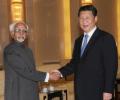
Vice President Hamid Ansari on Monday held talks with Chinese President Xi Jinping and conveyed the new Indian government's interest in furthering bilateral ties, even as he flagged off India's concerns over border related issues during his parleys with the top leadership in Beijing.

It is the first highest level face-to-face meeting between the two sides after the border row escalated in eastern Ladakh in early May.
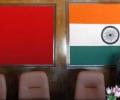
Contours of talks are being chalked out and these can take place at multiple levels including Joint Secretary- level. There is still no official word on the proposed meet from both sides.
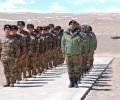
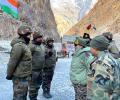
The talks till now have resulted in the resolution of issues in North and South Bank of Pangong Tso, Galwan and Gogra Hot Spring areas.
'We hope this round of meeting, on the basis of previous meetings, can move forward, further enlarge consensus, narrow differences and work for a solution that is acceptable to both parties,' the spokesperson said in updated comments posted on the ministry's website.

Doval's visit was 'part of regular high-level engagements between India and China', an Indian Embassy press release in Beijing said.

Announcing the hotline, the Chinese defence ministry said as agreed upon by the defence departments of China and Japan, the two sides have recently completed the construction of a direct telephone line for the sea and air liaison mechanism and will maintain communication on the arrangement for the launch.

External affairs ministry spokesperson Arindam Bagchi said that the birthday greetings by the prime minister to the Dalai Lama should be seen in this overall context.
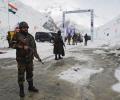
With Beijing remaining intransigent on the withdrawal of additional troops deployed by the People's Liberation Army (PLA) since the deadly border clash in 2020 in eastern Ladakh, India's bilateral ties with China remained frozen in 2023 with no forward movement on the horizon despite several rounds of diplomatic and military talks.

The compulsion behind India and Japan to deepen security cooperation is in response to China's growing political and economic clout and its assertive behaviour in disputed areas. This has been the key driver for bringing both India and Japan closer in the domain of security cooperation, explains Dr Rajaram Panda.

The meeting between Jaishankar and Pompeo comes at a time both India and the US are at loggerheads with China.
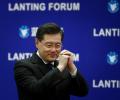
Qin, who is visiting New Delhi to attend the G20 Foreign Ministers meeting on Thursday, is expected to meet Jaishankar on its sidelines though the foreign ministry here is tight-lipped about it.

External Affairs Minister S Jaishankar said on Friday that India and China are going through a 'particularly bad patch' in their ties because Beijing has taken a set of actions in violation of agreements for which it still doesn't have a 'credible explanation' and it is for the Chinese leadership to answer where they want to take the bilateral relationship.

"We are working (on it)... we will try our best" to resolve the issue through bilateral discussions, Chinese Ambassador to India Zhang Yan. Chinese Vice-Minister of Commerce Zhong Shan and Indian Commerce Secretary G K Pillai held talks in New Delhi on Thursday on the issue. Pillai informed Zhong that India would extend the safety standards on imported toys to all the countries, not just China. Even the domestic manufacturers would be subjected to the same standards.
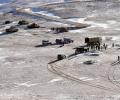
The Indian and Chinese troops are locked in an over three-year confrontation in certain friction points in eastern Ladakh even as the two sides completed disengagement from several areas following extensive diplomatic and military talks.

China is pulling out all the stops to give a 'state visit-plus' reception to Trump on his maiden visit.
A wide range of bilateral and global issues, including trade and developments relating to Syria and Iran, are likely to figure in talks External Affairs Minister S M Krishna will have with top Chinese leaders during his visit here to inaugurate the new USD 10 million Indian embassy building.

Had it not been for the slow but sure emergence of China as a threat to the western order, would India have been accepted as a near-equal partner by individual western nations, jointly and severally, questions N Sathiya Moorthy.

United States Secretary of State Antony Blinken has said that he had a productive meeting with visiting External Affairs Minister S Jaishankar during which they discussed the bilateral ties, COVID-19 relief efforts, India-China border situation and Afghanistan and vowed to work together to address areas of shared concern.

China and India on Wednesday held their upgraded strategic dialogue to shore up bilateral ties amid hectic parleys to resolve differences over Beijing's reluctance to support India's bid for Nuclear Suppliers Group membership as well as a United Nations ban on JeM chief Masood Azhar.

The Wednesday talks took place amid a war of words between the two sides on perception of the LAC, the de-facto Sino-India border spanning a length of nearly 3,500 km.

The in-person talks are taking place at a time when India is locked in a tense standoff with China in eastern Ladakh and the Trump administration's growing friction with Beijing over a host of issues including trade tariff and the Chinese military's offensive manoeuvres in the South China Sea.

The 2+2 was attended by Secretary of State Antony Blinken and Secretary of Defence Lloyd Austin and their Indian counterparts S Jaishankar and Rajnath Singh respectively.

US President Joe Biden is set to meet his Chinese counterpart on Wednesday in the San Francisco Bay Area, CNN reported, citing senior US administration officials.
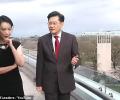
Qin, 57, was made the foreign minister in December last year, superseding many seniors, earning the distinction of a rising star in the ruling Communist Party of China.
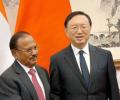
National Security Advisor Ajit Doval and his Chinese counterpart Yang Jiechi will meet in Hyderabad in November first week for informal dialogue on the state of bilateral relations

This was the first round of talks for Wang after he succeeded State Councillor Yang Jiechi earlier this year.

'Wang Yi said the border issue is important and we should stay committed to peacefully addressing it through consultation and coordination.'

'Sullivan and Jaishankar welcomed the cooperation in recent weeks that resulted in deliveries of over USD 500 million in COVID-19 relief supplies from the US federal and state governments, US companies and private citizens across America for the people of India'

'The two sides agree to continue firmly supporting each other in safeguarding their respective core interests,' a joint statement issued at the end of Muizzu's talks with Chinese leaders said.
Chinese Foreign Minister Qin Gang will travel to India to attend the Shanghai Cooperation Organisation (SCO) foreign ministers' meeting being held in Goa on May 4 and 5, the foreign ministry in Beijing announced on Tuesday.
Throughout its standoff with India along the Line of Actual Control (LAC), Chinese officials sought to downplay the severity of the crisis, emphasising Beijing's intent to preserve border stability and prevent the standoff from harming other areas of its bilateral relationship with India, the Pentagon said in a report on Tuesday.

Returning home after a five-day high-profile state visit to China, Maldives President Mohamed Muizzu on Saturday struck a defiant note saying that his country may be small but 'doesn't give them the license to bully us'.

The external affairs ministry said the talks were 'positive'.


China welcomes all initiatives that truly help developing countries build infrastructure and sincere efforts to promote connectivity and common development, the Chinese Foreign Ministry said.

India and Japan on Thursday agreed to enhance military exercises and defence cooperation as the two countries emphasised that the bilateral special strategic and global partnership plays a crucial role in ensuring a free, open and rules-based Indo-Pacific, amidst China's aggressive behaviour in the region.
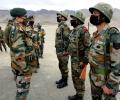
The seventh round of military talks between India and China held on Monday was "positive and constructive", and both sides agreed to earnestly implement the understanding reached by their leaders to not turn differences into disputes, a joint statement by the two armies said on Tuesday.
Chinese foreign ministry spokesperson Mao Ning told the media in Beijing on Monday that the two sides held an in-depth exchange of views on expediting the resolution of relevant issues.
